Every December, I perform the same ritual: the one-word diagnostic. One word per bad decision. No excuses. No explanations longer than a single syllable.
Steal this process. I know you will. 😉
This time of year, I do something most business owners avoid: I admit every stupid decision I made that year. Not “the market was tough.” Not “customers don’t get it.” My mistakes. My disasters. My galaxy-brain ideas that crashed and burned.
Here’s the process that saved my business.
The Story
A trusted employee was stealing cash from my repair shop. The security footage showed them pocketing money, then helping me search for it. Bold move, honestly. They went to a competitor. Then my family experienced devastating loss. Then the pandemic hit.
I opened Excel. Because apparently that’s what nerds do when everything falls apart.
The Process
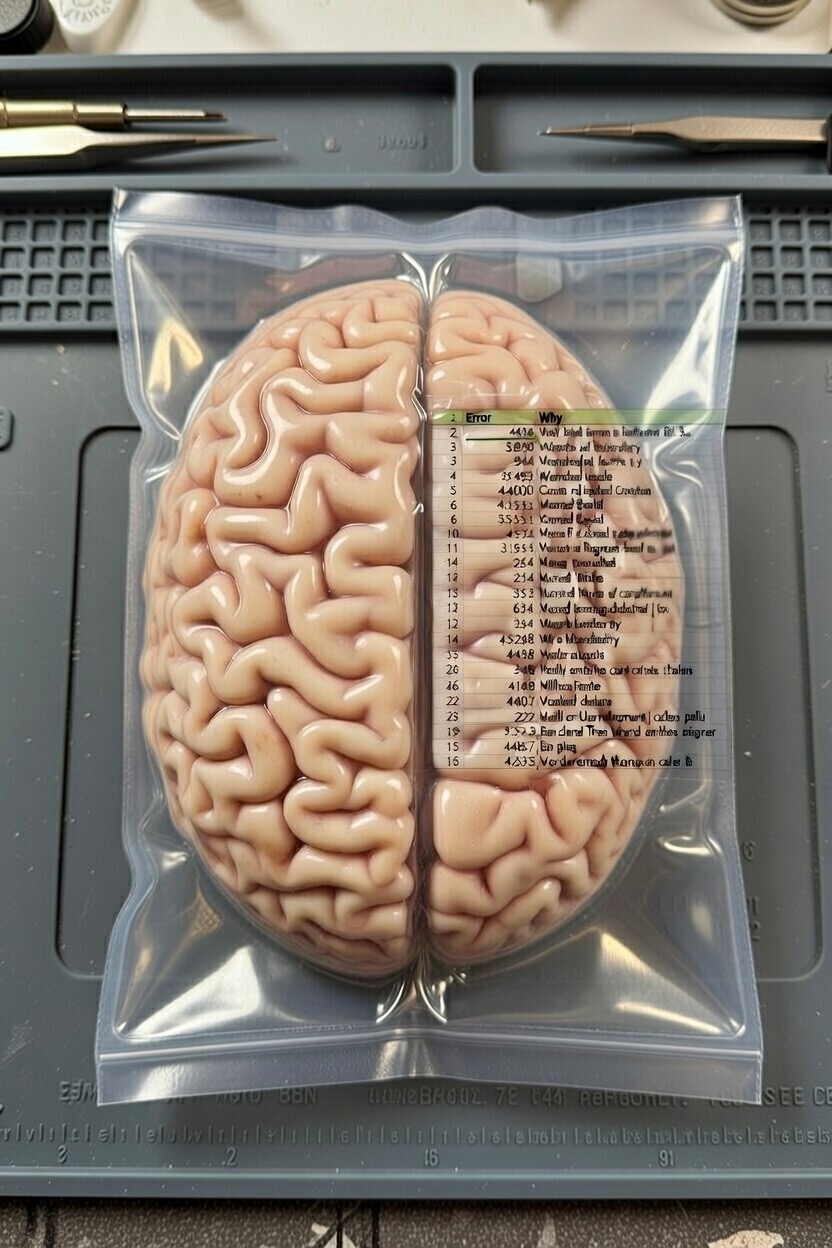
I listed every bad decision I’d made in eight years of business at that point. Then I wrote why I made each one. The explanations were long. Operation Brain Dump: Paragraphs of justification and rationalization. So much context. So many reasons.
Then I cut each explanation in half. Then half again. And again. Until every bad decision was explained by a single word.
Your brain will hate this part. Mine sure did.
The Pattern
I expected variety. Fear. Inexperience. Bad luck. Mercury in retrograde. Whatever.
Instead, nearly every mistake traced back to one word: Ego.
Bad hires? Ego made me think I could “fix” anyone, ignore my gut, not do due diligence. Poor location decisions? Ego convinced me I’d succeed where others failed. Strategic mistakes? Ego made me prioritize looking successful over being successful. Expanding too fast? Ego wanted to prove something to people who weren’t even paying attention.
Nearly every single mistake came back to ego. And ego is something I can control.
Unlike, say, pandemics. Or employees who steal from you.
The Performance Problem
Some operators focus on performance—impressive top line revenue, social media, the right buzzwords, the appearance of growth. They use words like “authentic” and “local” and “craft” without years of consistent action behind them. They study what successful businesses look like from the outside and copy the surface elements.
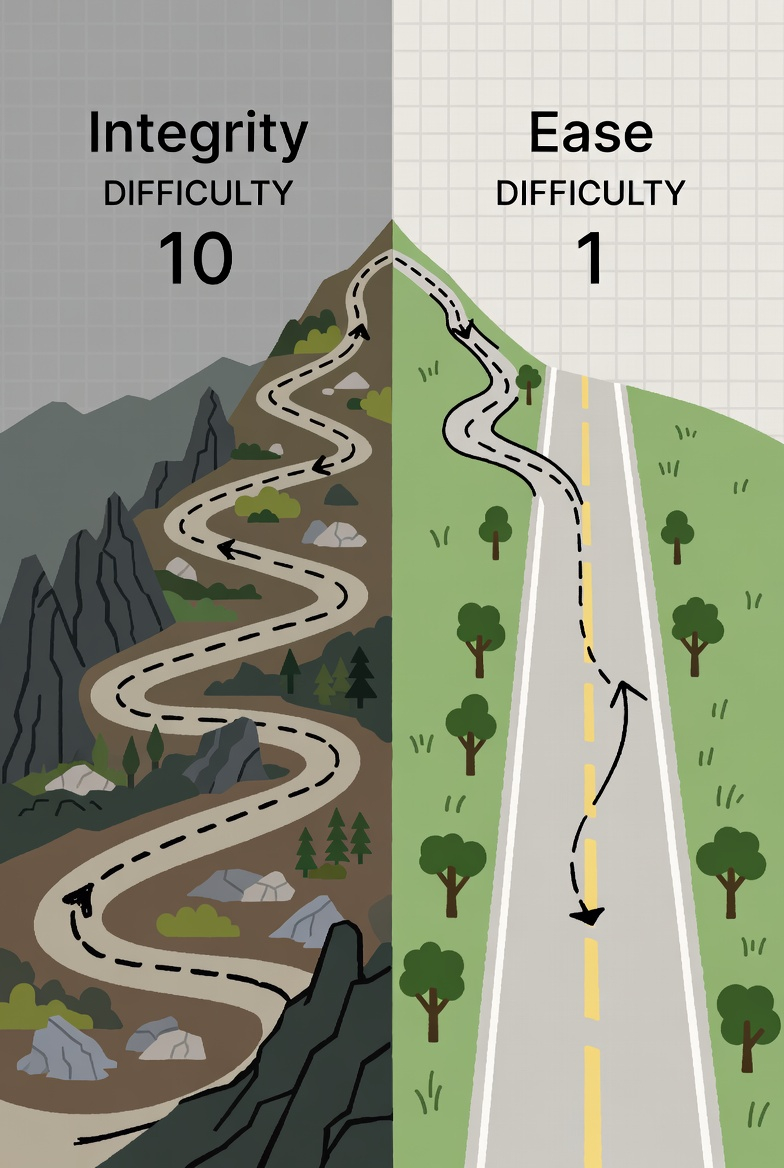
Ego loves performance. It’s easier to look successful than to do the hard work of becoming successful.
It’s like Catch Me If You Can—Frank Abagnale could wear a pilot’s uniform and look the part convincingly. But when it came time to fly the plane? That required something you can’t fake.
You can copy the appearance. You can’t copy the substance. And eventually, someone asks you to actually fly the plane.
The Results
The year I started this process—2020—was my worst year ever. The year after was my best. Not because the market improved. Not because I got lucky. Because I made better decisions.
The actual problem wasn’t the employee who stole. It wasn’t the pandemic. The actual problem was me. My ego. My blind spots. My unshakeable conviction that I knew better than reality.
Once I fixed that, everything else started working. Funny how that happens.
I’ve done this every December since 2020. It’s become my year-end ritual. And every year, I catch patterns I wouldn’t have seen otherwise.
Your Turn
The 5-Step Process:
1. Make the list. Every bad decision from 2025. Be honest. This should hurt a little.
2. Write why. Not the story you tell others. The real reason. The one that makes you uncomfortable.
3. Cut ruthlessly. Half, then half again, until you’re down to one word per decision. No cheating with compound words.
4. Find your pattern. What word appears most? For me: ego. For you, maybe: fear, impatience, people-pleasing, greed, pride.
5. Make it a question. “Is this ego talking, or what’s best for the business?” Ask yourself before every major decision. You won’t always get it right. But you’ll catch yourself more often than you think.
The Hard Truth
This only works if you’re brutally honest. Most business owners would rather blame the market, the economy, their employees, their customers, the weather, the algorithm, anything.
Because external factors feel better than admitting: “I made bad decisions because of my own issues.”
But you can’t control external factors. Your ego? Your fear? Your desperate need to be right? Those you can control. That’s where your power is.
Everything else is just a really elaborate excuse.
Start In January
Open a spreadsheet. List your 2025 bad decisions. Write why you made them. Cut until you’re down to one word. Find your pattern.
You can’t fix what you refuse to see. But once you see it, you can’t unsee it.
And that’s when everything changes.
The difference between my worst year and my best year wasn’t what happened to me—it was what I stopped doing to myself.
What one word explains your worst business decisions?
(Steal this process. Just don’t steal from your register while you’re at it.)


 Breaking and Building
Leave a comment